
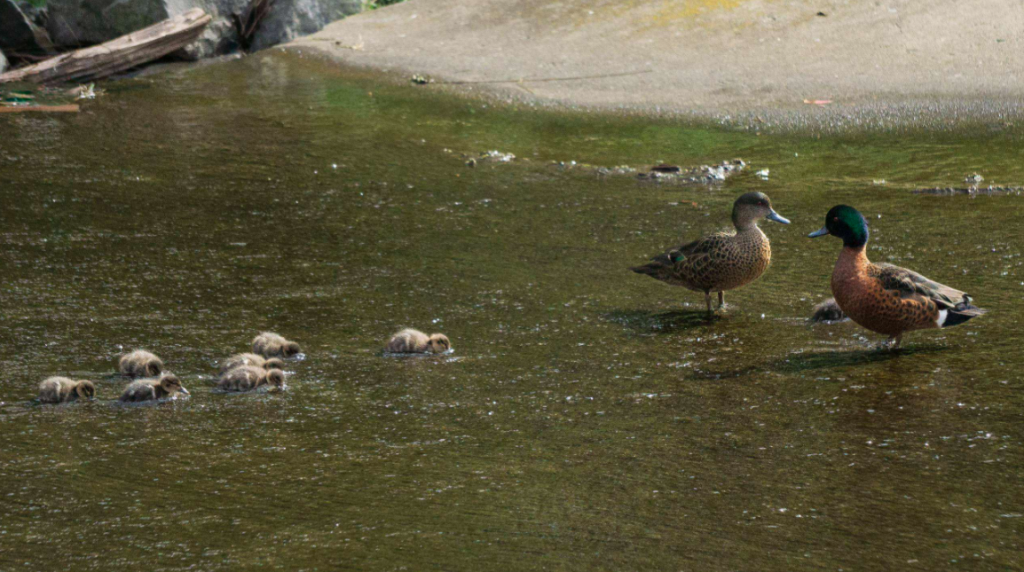
Native ducks are returning to waterways after the successful removal of feral ducks at multiple locations in Clarence.
Tasmania is home to 11 species of native ducks, with many of these species found in Clarence, including Chestnut Teals, Australian Shelducks, and Pacific Black Ducks.
Our Environment and Biodiversity team are working to protect these native ducks as part of their role to care for biodiversity in Clarence.
Earlier this year, the team began removing feral ducks from the Kangaroo Bay Rivulet, Richmond, Seven Mile Beach, and Lindisfarne.
It’s still early days but we’ve removed around 100 feral ducks and the native ducks are thriving, their numbers are increasing, and other birds are returning to the waterways.
Successful removals
The team continues to survey native duck numbers at Kangaroo Bay Rivulet, which was one of the first Clarence waterways feral ducks were removed from.
Six months after removals, the native duck numbers have more than doubled.
Even more exciting is the decision by a family of Chestnut Teals to nest at the rivulet. This native species has not previously been seen raising ducklings in this area.
There have also been more swans and grebes spotted by members of our community at Lindisfarne Bay, and greater biodiversity of birds moving into the Coal River Rivulet at Richmond.
Saving Pacific Black Ducks
Feral ducks are invasive domestic duck species (most likely Mallards) that have been abandoned and dumped in our waterways, as well as hybrids (domestic/native mixed breed ducks).
A key focus of the invasive duck removal program was to protect the Pacific Black Duck (PBD) from the threat of extinction arising from feral ducks.
PBDs are especially at risk from overbearing Mallards, which are a larger and more aggressive duck species. Mallards have a competitive advantage over the smaller and timid PBDs but can also breed with PBDs to produce fertile hybrid offspring.
These factors have already led to the functional extinction of PBDs in New Zealand.
Our Environmental and Biodiversity team will continue their work to prevent the same from happening in Clarence.
This includes educating the community:
- Not to feed ducks in the wild, or at any waterways in Clarence
- Not to dump or abandon pet ducks in the wild, which is cruel and illegal
- Responsible pet duck ownership
- Awareness of the bird flu, and ways we can prevent its spread to protect native bird species.
Learn more about the work of our City of Clarence Environment and Biodiversity team.
Learn about what to do if you see a snake, or report roadkill or abandoned ducks at City of Clarence – Wildlife.